

Most tree work can appear similar to an untrained eye. However, certain practices can significantly compromise a tree’s structure, health, and long-term stability.
Understanding the difference between professional pruning and topping is essential to protect your property, preserve the value of your trees, and avoid inappropriate interventions.
In urban environments like Gatineau and Ottawa, this distinction is particularly important, as trees often grow near buildings, traffic areas, and infrastructure.
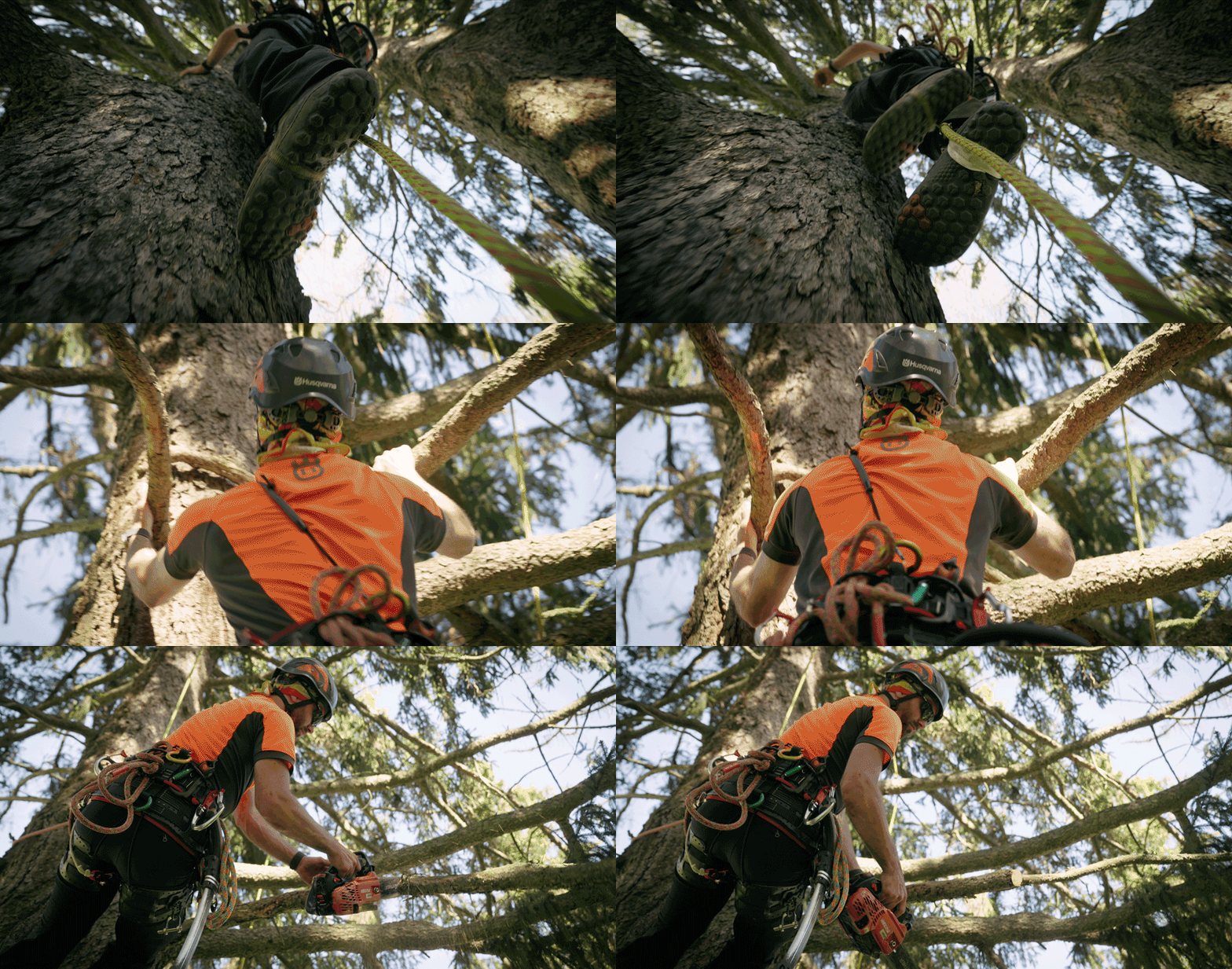
Pruning is a targeted, deliberate intervention adapted to each tree in order to improve its structure, stability, safety, and longevity.
Professional pruning is based on:
The objective is not simply to remove branches, but to reduce mechanical stress, improve coexistence with the environment, and extend the lifespan of the tree without compromising its integrity.
Topping involves cutting the top or main branches of a tree, usually to reduce its height quickly.
Although still practiced, it is considered inappropriate in modern arboriculture. While it may create a short-term impression of control, it often leads to significant structural and biological consequences.
In many cases, topping does not resolve the original issue. Instead, it postpones and amplifies it, resulting in a tree that is more vulnerable, less stable, and more costly to maintain over time.

Every tree is different. An on-site evaluation allows us to determine whether pruning, reduction, or another approach is appropriate based on the specific situation.
